
The regulator is more carefully scrutinising applications by infrastructure investment vehicles that have a limited number of investors. They have been asked to broaden their investor base before application approval, according to two people familiar with the matter. The Securities and Exchange Board of India is concerned about the structure being used for getting around tax requirements, according to one of the sources.

'This can eventually start the end of the current market frenzy, which has lasted for a full year.'

The 30-share BSE Sensex surged by 477.24 points or 0.83 per cent to close at more than one-week high of 57,897.48. As many as 28 of its constituents closed with gains while two declined. The broad-based Nifty of the National Stock Exchange rose by 147.20 points or 0.86 per cent to settle 17,233.45, tracking gains in Sun Pharma, Asian Paints, and Reliance Industries.
Shares of ICICI Bank may outperform those of HDFC Bank in the near-term, analysts said recently, after the Sandeep Bakhshi-led private sector lender reported a strong set of numbers for the July to September quarter (Q2) of financial year 2023-24 (FY24). The result, they said, reiterated that ICICI Bank is maintaining a sustainable and prudent growth led by tech-driven initiatives as against HDFC Bank, which is facing merger related challenges. According to analysts at Prabhudas Lilladher, ICICI Bank is valued at par with HDFC Bank at 2.2x/1.9x on FY25/26E core adjusted book value (ABV) basis.
The NSE Nifty shut shop at 4,914, up 58 points.

Indian economy has clocked a growth of 8.7 per cent in the first half of the calendar year. It said strong farm production will help drive economic recovery and also bring down food inflation, even though it said, 'inflation remains worrying.'

Benchmark Sensex trimmed early gains to close marginally higher while Nifty settled flat in choppy trade on Tuesday as gains in auto shares were offset by selling pressure in banking and energy shares. The 30-share BSE barometer closed marginally up by 37.08 points or 0.06 per cent to 60,978.75 with 15 of its stocks ending in green and the rest in red. The index opened higher and gained over 300 points to a high of 61,266.06 in early trade.

While the markets have factored in a number close to 350 for the BJP and almost 400 for the NDA, 50 seats fewer could trigger a market correction

Among Sensex shares, HDFC Bank fell the most by 2.58 per cent, followed by SBI (2.12 per cent), HDFC (2.09 per cent), and IndusInd Bank (2.02 per cent). Axis Bank, Bajaj Finserv, M&M, L&T, Reliance, Infosys and TCS were among the major losers. In contrast, Tata Motors, Maruti, NTPC, Sun Pharma, Power Grid and Titan were among the gainers.
'China's investment destination image the world over has taken a beating, therefore investors feel India is a safe haven for investments.' 'FDI is at an all-time high in India.' 'Now after such poor ratings, this FDI amount will fall.' 'Therefore, I am saying these things are happening at China's behest.'

ICICI Bank was the top gainer after stable rating for its senior unsecured bonds by S&P Global Ratings.

Following it negotiations with Ford Motors for the aquisition of Jaguar and Land Rover, Tata Motors has been put under credit watch.
We expect the region to record another year of solid growth in 2011, the survey said.
T C A Anant, the Union government's chief statistician, thinks global rating agency Standard & Poor's (S&P) does not fully understand our economy's structure, comprising a large unorganised sector as well.
India and China will grow at 8 per cent or above in the next two years, says global rating agency S&P. According to the report titled 'Asian resilience amid global turbulence', strong regional drivers are expected to insulate the Asian economies from the adverse impact of a moderate recession in the US. Even though the growth rates of Asia-Pacific would slow somewhat, the region would still grow at a relatively fast pace in 2008 and 2009 - buoyed by China and India.
Global rating agency Standard & Poor's on Tuesday said Indian banks were financially stronger than Chinese banks although some of the China-based banks have higher credit ratings.

Investors' wealth eroded by more than Rs 2.21 lakh crore in early trade on Wednesday, with the market witnessing a selling-off amid prospects of aggressive rate hikes by the US Federal Reserve to tackle high inflation, and sluggish global trends. In less than an hour of the start of trading on Wednesday, the key indices -- Sensex and Nifty -- were deep in the red and witnessed significant volatility, reflecting jittery investor sentiments. The market capitalisation of BSE-listed companies, which is also an indicator of wealth of investors, tumbled more than Rs 2.21 lakh crore to Rs 2,84,49,727.56 crore amid the 30-share Sensex falling 564.76 points to 60,006.32 points.
Global rating agency Standard & Poor's on Wednesday upgraded India's outlook to positive from stable and affirmed the sovereign 'BB+/B' ratings to the country due to improvement in government finances.

Speaking at industry association CII's annual session, PM Modi said the government has taken tough steps to fight the coronavirus pandemic and has also taken care of the economy. "On the one hand we have to safe the lives of our people and on the other hand we have to stabilise the economy and speed up the economy," he said. "Yes, we will definitely get our growth back," he asserted.

India's defence sector presents an ordering opportunity worth $138 billion between fiscal years 2023-24 (FY24) and FY32, said a latest note by Nomura, which has initiated coverage on two defence-related players - Hindustan Aeronautics (HAL) and Bharat Electronics (BEL) - with a 'buy' rating. The research and broking house sees an upside potential of 28 per cent and 32 per cent, respectively in these two stocks from the current levels.

After a turnaround in performance by Indian equity markets since July that has seen the S&P BSE Sensex and the Nifty50 wipe out the year-to-date losses, analysts suggest investors start nibbling into stocks that are focused on the domestic economy. While they say intermittent corrections, led by policies of global central banks and other economic data, cannot be ruled out, analysts expect India's relative outperformance among global equity markets to continue as it looks better placed with a healthy economic recovery, and remains one of the fastest growing major economies. In this backdrop, Neeraj Chadawar, head of quantitative equity strategy at Axis Securities, believes that amid global slowdown, aggressive tightening by the central banks, and preference for domestic interests first (by the local government), export-oriented themes are likely to be muted or will deliver conservative returns in the near-term.
The downturn in commodities and oil refining, stemming from global economic slowdown, has affected profitability. This is expected to weaken the company's cash flow measures, S&P said.
The ratings reflected the growing strength of India's macro-economic stability, Finance Minister P Chidambaram said.
Moody's said implementation challenges, in addition to affecting growth and government revenues, will impact corporates by lowering sales volumes and cash flows.

Higher valuation creation in companies beyond the top 100 has given the domestic markets a shot at a $4 trillion market capitalisation (mcap) - a club exclusive to three countries currently. On November 23, the mcap of all BSE-listed stocks finished at a new record of Rs 328.33 trillion ($3.94 trillion), despite the benchmark indices ending with losses. The mcap was propelled by gains in the broader market, including small and midcap stocks - a trend dominant this year.

Equity markets rallied after softer-than-expected inflation data in the US and UK rekindled hopes of the end of the rate-hiking cycle by major central banks. The soft inflation reading drove down bond yields and the US dollar, whetting the appetite for risky assets. The 10-year US bond yield fell below 4.5 per cent after topping 5 per cent less than a month ago.
However, the Indian economy is expected to bounce back in 2021, the World Bank said.

Bajaj Auto's market capitalisation (market cap) hit Rs 2 trillion mark for the first time. The stock of the two and three-wheeler major rallied 6 per cent to hit a new high of Rs 7,420 on the BSE in Tuesday's (January 9) intraday trade after its board approved Rs 4,000 crore share buyback at Rs 10,000 per share. The stock ended the day at Rs 7,093.75, up 1.55 per cent and its market cap a shade above Rs 2 trillion.

Wall Street-correlated stock markets are facing the risk of correction, as Christopher Wood, the global head of equity strategy at Jefferies, conveys to investors in his latest edition of GREED & fear. Rising crude oil prices, which are nearing $100 a barrel (Brent), pose a threat to the global central bank's battle against inflation and have led to a re-evaluation of its exposure to Indian stocks. "The potential for more US Federal Reserve (Fed) rate hikes, combined with the risk that monetary tightening finally bites as regards the economy, remains a risk for Wall Street-correlated world stock markets. "There is also the oil factor. This is why GREED & fear continues to believe the pain trade is down. "Areas in Asia, such as Indian midcaps, which have already done very well, are at obvious risk of some profit-taking," writes Wood.
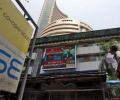
Benchmark indices Sensex and Nifty declined in early trade on Wednesday due to selling in financials, oil and IT stocks amid weak global trends.

'The slide in growth has arisen primarily because we have an NBFC crisis on top of a banking crisis,' points out T T Ram Mohan.
Global rating agency Standard and Poor's on Monday cautioned that the credit quality of Mukesh Ambani controlled Reliance group's flagship company RIL might "weaken"

Analysts have given a thumbs up to the Reliance Industries (RIL) and Walt Disney Co. (Disney) proposed a joint venture (JV). The stock of the Mukesh Ambani-controlled company gained nearly 1.5 per cent on Thursday to Rs 2,952 levels as compared to the S&P BSE Sensex that traded marginally weak, down 0.2 per cent to 72,172 levels in intra-day trades.
Competition in the cellular market, including the capital, could soon be hotting up with the Department of Telecom clearing a proposal to issue letter of intent to mobile operator Aircel in eight of the 11 circles it had applied for licences.

It has mostly been a one-way street for markets that have moved up sharply since July. The front-line indices - the S&P BSE Sensex and the Nifty50 - have gained 6.7 per cent and 7.3 per cent, respectively, in the past three months. The rally in mid- and small-caps has been sharper, with both indices surging 14 per cent and 9 per cent, respectively, during this period. This sharp run has made analysts at Jefferies cautious.

'New record for the Nifty50 is only a question of when.'

Market breadth depicted gains with 1,476 advances over 1,403 declines on the BSE. 140 stocks remained unchanged.

Life Insurance Corporation of India (LIC) February 8 for the first time ever crossed the Rs 7 trillion market capitalisation, as the stock price of state-owned insurer hit a new high of Rs 1,144,45, on rallying 10 per cent on the BSE. The board of directors of the Corporation are scheduled to meet today i.e. February 8, 2024, to consider a proposal for declaration of interim dividend for the financial year 2023-24 (FY24). The board will also consider and approve the unaudited financial results for the quarter and nine-month period ended on December 31, 2023.
Most analysts have downgraded the stock of SBI Cards and Payments (SBI Card) as the credit card issuer posted weak results during the December quarter (Q3) of financial year 2023-24 (FY24). The sub-par show, analysts said, was for the eighth straight quarter. With this, they have slashed their earnings estimates by as much as 20 per cent over FY24-26 amid near-term pressure points in the company's growth outlook.
